The ten minutes when Sweden changed sides
Sweden's 1967 lane change followed years of preparation. Bus conversions and temporary road restrictions explain the operation behind the familiar photographs.
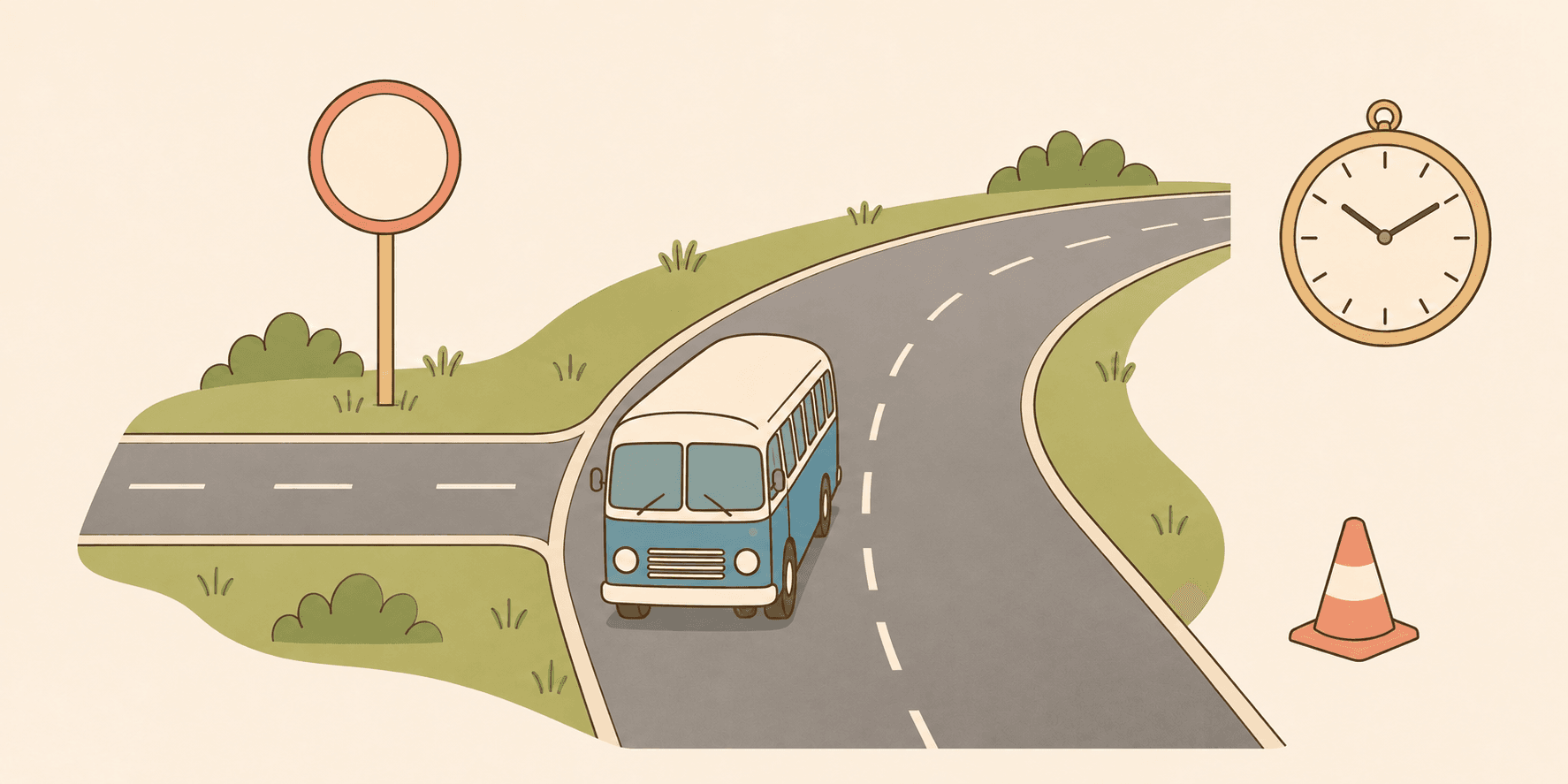
At 04:50 on September 3, 1967, the vehicles permitted on Sweden's roads had to stop on the left. They then moved carefully to the right, ready to continue after 05:00. The visible change took minutes. Preparing the country for it had taken years.
The timing came with restrictions. Most traffic was prohibited between 01:00 and 06:00, with exceptions for essential vehicles. Some urban areas had longer closures. Sweden's transport-history collection documents the sequence, which gives the familiar photographs their missing context. The national museum account of the switch
Drivers were moving through a planned pause. The photographs capture one part of a much larger operation.
The decision preceded the deadline
A majority opposed changing sides in Sweden's advisory referendum of 1955. Parliament approved the change in 1963, with implementation set for 1967. Stockholm's historical account places the decision beside increasing international road travel, which made Sweden's different traffic rule more awkward at its borders. Stockholm's account of the 1967 change
Those dates separate the political decision from the work needed to carry it out. Once the date was set, a vehicle intended to stay in service beyond it needed a plan for operating under the new rule.
The scope also had a boundary. The 1963 decision covered road traffic, with tram traffic included. Railways and the metro were outside that change, according to the museum's account. A national deadline still needed an exact definition of the systems affected.
That boundary would influence every local plan. Someone preparing a crossing needed to know which approaching vehicles would change their movement. A broad instruction to change sides would leave that detail unanswered.
A bus had to keep serving passengers
David M. Baldwin's 1968 report for the Highway Research Record describes buses as a substantial part of the conversion. Before the decision, Swedish buses had passenger doors on the left. Rebuilding or replacement had to be spread over time, so some buses operated with doors on both sides during the transition. Baldwin's contemporary report, printed page 33
The doors make the scheduling problem tangible. A bus was an object that had to work on the old road system before the change. It also had to work on the new system afterward. Taking every vehicle out of service simultaneously for a lengthy rebuild would create a separate transport problem.
A temporary arrangement could let preparation proceed before the final date. That arrangement still needed to support the rule in force each day. The conversion schedule therefore had to account for continued service throughout the preparation period.
The same reasoning reaches beyond the vehicle. A passenger needs to board from the intended stopping place. Moving the vehicle's path changes how that stop has to be approached. Completing the vehicle work leaves the street around it to be checked.
Instructions had to match the street
Baldwin also describes new road signs covered before the change, with old signs removed afterward. Some new directional markings needed their arrowheads added on the day. Work could be prepared in advance while its final instruction remained inactive. The road-work account, printed page 34
This is the coordination problem behind a single national time. An uncovered sign could tell a driver to make a movement that the active traffic system still opposed. A sign left covered afterward could withhold a direction the new arrangement required.
The museum's account describes separate commission responsibilities for road changes and vehicle conversion. Public information was another responsibility. The organization reflected the fact that a completed street still needed people to understand how to use it.
A driver reading the correct sign could adjust their route. A pedestrian approaching from the pavement faced a different movement to anticipate. Communicating the change had to reach road users beyond the people holding steering wheels.
Lower speed was part of the event
Temporary speed restrictions accompanied the switch. Where the limit had been 50 km/h, it became 40 km/h. Sweden's transport-history account documents further changes to speed limits during September. The history of the temporary limits
That changes how the early accident record should be read. Stockholm's historical account reports fewer accidents after the transition, while pointing to other changes made at the same time. The information campaign accompanied revised traffic arrangements.
An early decline is an observation about that combined period. Assigning the entire decline to the chosen side of the road would require separating its effect from the other changes. The historical sequence alone leaves that calculation unresolved.
It also leaves the duration of any effect to be examined. The first morning describes the first morning. A claim about later safety needs observations from the later period it names.
The road reopened before every habit changed
At 05:00, Sweden had a new rule in force. The temporary limits remained part of the conditions under which people began using it. Completing the lane change left daily travel to resume under those conditions.
Baldwin's early report describes drivers reverting to left-hand habits. It also reports above-average injury accidents involving bicycles and mopeds during the first weeks. Those observations give particular road users a place in a story often told through a photograph of cars. The early observations, printed pages 35-36
The episode gives a concrete answer to the idea that changing traffic sides is a matter of issuing one instruction. Each bus needed to reach a usable stop. Each active sign needed to agree with the movement it directed. The deadline brought those separate pieces into operation together.