A wildlife-camera alert still needs someone who can respond
TrailGuard has published field evidence for rapid image alerts. A deployment also needs a tested route from detection to a responsible field response.
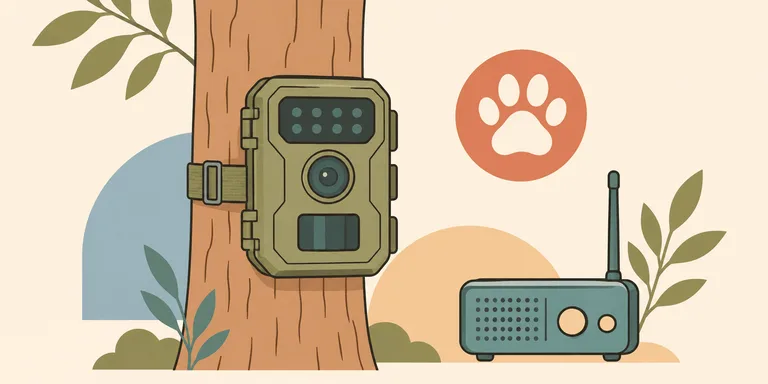
A camera alert can give a ranger team an earlier chance to inspect an event. The result still depends on whether someone receives the image and can respond to what it actually shows.
TrailGuard AI is a real camera-alert system with published field research. The defensible story begins with those observations. A named ranger's dramatic arrest scene would require a documented account of that incident, with permission to publish the details.
The field study measured an alert pathway
A 2023 BioScience paper reported TrailGuard AI deployments in India. The cameras used on-device image analysis to identify targets of interest and transmit selected images. The researchers reported tiger-image notifications arriving in a smartphone application approximately 30 seconds after the camera trigger.
That measurement concerns image delivery in the reported deployments. Travel to the location takes additional time. An alert's arrival gives a team information it can use; it leaves the subsequent field outcome to be established separately.
The distinction affects how a conservation team should evaluate the system. A delivery-time result answers whether the observation can arrive quickly enough to be useful. It does not measure every link between receiving that image and reducing harm across a whole protected area.
The paper also describes uses concerning human presence. A detected person is an observation requiring context. The image alone cannot determine the person's authorisation to be there. A review process needs to preserve that uncertainty.
Local analysis reduces what must be transmitted
RESOLVE's description of TrailGuard and Nightjar says the system can identify selected wildlife, people and vehicles. It describes image transmission using cellular, radio or satellite networks. Those are product capabilities described by the organisation that developed the project.
On-device analysis lets the system select images before sending an alert. That can reduce the volume a remote operator has to inspect compared with receiving every captured frame. The usefulness of the selection depends on what the model misses as well as what it sends.
A team needs a way to inspect missed detections during evaluation. Looking only at delivered alerts leaves out events that never generated a message. If a reference camera or a planned field observation provides a comparison, the team can examine whether a relevant event was captured and selected.
The same model can face different conditions after deployment. Vegetation may obscure the subject. A camera can shift. The evaluation record should say which conditions were actually tested so a successful trial is not extended to every possible site.
Delivery needs an accountable recipient
An alert system needs an assigned recipient at the time the event occurs. A message sent to a phone that nobody is monitoring leaves the response chain incomplete. The operating plan should identify how an alert is acknowledged and what happens when the first recipient is unavailable.
Keep the relevant timestamps separate during a trial. Record when the camera captured the image. Record when the receiving service got it, followed by the acknowledgment time. Those observations help locate a delay without attributing every failure to the model.
Response resources also determine what a rapid notification can achieve. A team unable to reach the reported location may still use the image for later investigation, but that is a different operational outcome from an immediate field response. Describe the outcome the deployment can actually support.
Access to images of people needs a defined purpose. Limit who can inspect them and how long they are retained. A conservation objective still requires decisions about the people whose movements may appear in the record.
National totals cannot evaluate one camera deployment
South Africa's environment department reported 352 rhinos poached during 2025. Its September 2026 update reported 230 nationally for January through August 2026, compared with 248 over the same months in 2025.
The full-year total and the partial-year total cover different periods. Comparing the 2026 partial count directly with the full 2025 count would exaggerate the apparent change. The matched eight-month comparison answers the narrower question it was measured to answer.
Those national statistics also cover a much broader set of interventions than one camera system. They cannot assign an effect to TrailGuard. A local evaluation needs a defined area and a credible comparison, with an explanation of what changed during the observation period.
A rise in recorded incidents can itself need interpretation. Better monitoring may reveal activity that was previously missed. A lower alert count may reflect fewer events or a fault in detection. The records need enough context to distinguish those possibilities.
Evaluate the complete response chain
A useful trial begins with a question the team can answer. Can an image of the target event reach a responsible operator within the time the operation needs? Test that question under the site's actual connectivity conditions, then inspect what happens after receipt.
Record the failures alongside the successful messages. A missed event and an unacknowledged alert require different repairs. That record can support a purchase decision more directly than a claim that artificial intelligence stops poaching.
TrailGuard's published work gives conservation teams a documented starting point for testing rapid image alerts. A team can justify the deployment with a record of useful detections. Its operating plan must show how a responsible operator turns an image into field action.