Your morning brief needs source checkpoints before it needs a summariser
Prevent stale syncs, incorrect contact merges and duplicate follow-ups from becoming confident operational advice.
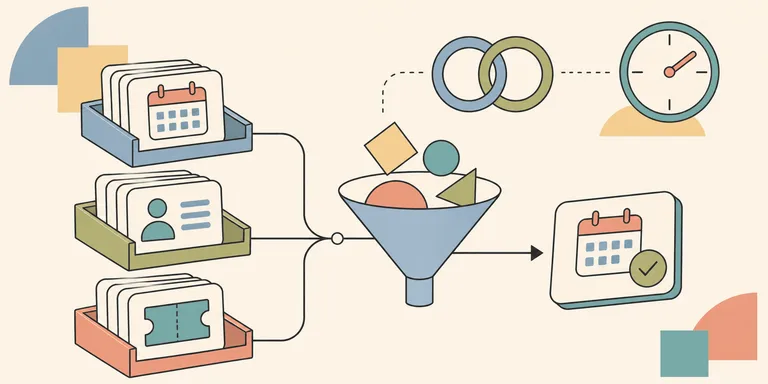
A morning operations brief can be wrong before the summariser receives its first token. An incomplete calendar sync or an incorrect contact merge can produce fluent advice from broken inputs.
Build the data path so those failures stay visible. OpenClaw can schedule the work and an automation tool can coordinate the fetches, but the pipeline still needs rules for identity and completeness.
Give each source a checkpoint
Store when the last successful fetch completed and which source account it covered. Keep that checkpoint separate from the time the morning brief was sent.
A calendar read at 06:00 and a CRM read at 07:20 do not describe one simultaneous snapshot. Record those times so the assembled view can explain the difference.
Google Calendar's incremental synchronisation guide describes persisting a sync token and processing changes across pages. The next token arrives on the final page of a paginated sync. Advancing a local checkpoint before processing the complete response can lose work.
The same guide specifies recovery when a sync token becomes invalid, including a full resynchronisation after a 410 response. A retry loop using the invalid token will not repair that state.
Other APIs have different rules. Implement the checkpoint against each source's documented semantics. A timestamp filter that happens to work for one CRM should not be assumed to capture calendar deletions.
Keep uncertain matches separate
Two records named John Smith are insufficient evidence that they describe the same person. Even an email address can be shared or change over time. Decide what identity means in the systems you are joining.
HubSpot's contacts API guide documents identifiers and retrieval options for its contact records. A stable source record identifier gives you a starting point inside that system. Linking it to another system still needs a mapping.
Keep the original identifiers on every normalised item. Store a confirmed cross-system relationship separately from a proposed match. That allows a reviewer to reverse a mistaken association without reconstructing the original exports.
For an uncertain match, show both candidates or mark the ambiguity. An automatic merge can put a private customer conversation beside the wrong account. The cost is larger than a duplicated row in the brief.
Make correction persistent. If a human separates two records today, tomorrow's matching process should respect that decision. Otherwise the pipeline repeatedly asks the same question while recreating the same error.
Calculate a deadline using the actual service calendar
A ticket that has been open for six hours has an elapsed age. Whether it breached a promised response time depends on the applicable policy.
Business hours and holidays can affect that calculation. Paused states can affect it too. A generic urgency score cannot replace the policy that defines when the clock runs.
Atlassian's SLA calendar documentation provides a concrete implementation with working hours and timezone settings. Use your actual support system's calculated deadline when it is available, and preserve the policy reference.
If you calculate the deadline yourself, test a ticket crossing a weekend. Include a daylight-saving transition for a timezone that uses one. Compare the result with the source system before relying on it for escalation.
A change to the customer's service tier may also change the applicable rule. Preserve the effective policy used for a calculation so a later investigation can explain the alert.
Retry the follow-up without creating it twice
The brief can propose a task that already exists. Give the proposed follow-up an identity based on its source item and purpose. A different wording should not create another task for the same unresolved obligation.
After task creation, store the returned identity and link it back to the brief item. If the response is lost, reconcile the target before creating again. Keep an unknown result visible until that check resolves it.
Treat incomplete source fetches similarly. A partial brief can be useful if it states which sources are missing. It should never describe a failed CRM query as an empty sales pipeline.
Pilot the pipeline with one source before adding another. Test a deleted calendar event and two same-named contacts. Then rerun a failed task creation. These cases will reveal whether the next morning's brief is built from current evidence or simply delivered on time.