Tilda can export a page without accepting your article draft
Read, export, notify, create, and publish are different capabilities. Check the direction of the Tilda APIs before designing an unattended article workflow.
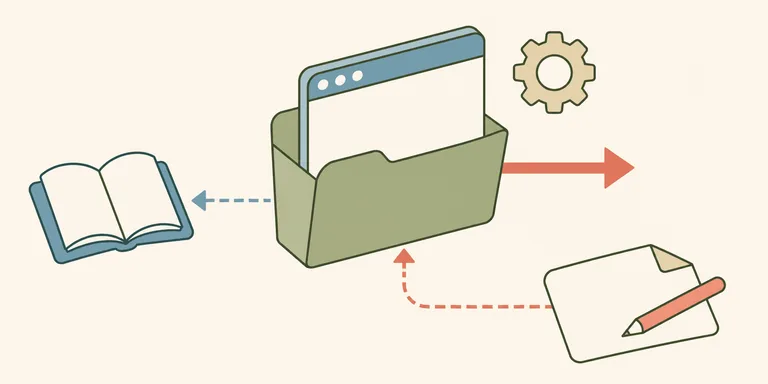
A publishing workflow needs a supported way to write content into its destination. An API that exports finished pages can help distribute a website, but it cannot be assumed to accept a new article just because it returns page data.
That distinction is the first thing to check before connecting an AI drafting workflow to Tilda. Separate producing the draft, saving it in the content system, publishing it, and confirming the public URL. Each step needs its own evidence.
Read the direction of the API
Tilda's current project API documentation describes GET requests that retrieve projects and pages for synchronising Tilda-created content with another server. Its documented methods cover reading and exporting. They do not provide an article-create or article-update method.
The API also has a publication webhook. It notifies an external server after a page is published, so that server can synchronise its copy. The documentation allows a delay of one to twenty minutes. Saying Tilda webhooks exist only for forms would miss this separate capability.
The direction remains the deciding detail: Tilda publishes, then notifies the receiving system. That callback is not an instruction for Tilda to create a page. A workflow can successfully receive it while having no supported upstream write route.
Before building an integration, write the proposed operation in plain language. "Retrieve an already published page" and "create a draft article" should never share an undifferentiated API checkbox in a requirements document.
A feed display API is another reading route
The Feeds Public API lets another website display feed posts while content remains managed in Tilda's Feeds admin panel. That can solve a presentation problem. It does not establish a documented method for an external drafting tool to create those posts.
Tilda's Feeds and News overview separately describes Feeds and Index Pages as ways to organise posts. Choosing between them affects the editing workflow and display. It should not be confused with choosing an external write interface.
If the requirement is unattended article creation, confirm that the destination supports that operation before selecting a layout. Otherwise the integration can reach its final step with a finished body and nowhere supported to save it.
Keep the editorial handoff explicit
A human publication step can be a reasonable design. The drafting system can prepare a title, excerpt, body, image, alternative text, and source links. An editor then checks the material in the intended template before publication.
That workflow needs a clear state transition. A draft being ready for the editor is different from a page being public. Record who accepted the article, which version was pasted or imported, and the resulting URL. Otherwise a successful content-generation run may be reported as a successful publication.
Do not solve the missing API operation by assuming browser scripting is a permanent publishing interface. UI changes, authentication interruptions, and incomplete saves can make that approach brittle. Any such fallback needs deliberate maintenance and verification, not an invisible dependency in a supposedly unattended process.
Separate content storage from presentation when needed
If automated writes are essential, evaluate a content system with a documented write API. Verify the specific collection, media upload, draft state, publication action, and authentication permissions. A product having an API in its marketing copy is insufficient.
The front end can still be chosen for its presentation strengths. Decide where articles live, which system owns their canonical URLs, and how navigation reaches them. A subdomain is one possible arrangement; it is not a universal requirement or an automatic SEO advantage.
Keep the ownership boundary simple enough to explain after a failure. If the CMS says an article is published but the static site has not rebuilt, the public result is pending. Repeatedly saving the same article does not prove that delivery recovered.
Verify from the reader's URL
After any publication path, request the public page directly. Check its title, complete body, canonical URL, images, and links. Then confirm that the article appears in the site's listing. A success response from an editor or export job cannot replace those checks.
Tilda can support a deliberate editorial workflow and documented outward synchronisation. The integration should follow those actual capabilities. Choose a different content boundary when the required write operation is missing, and keep the public page as the final test of delivery.