Count the full shift in an automated kitchen
Infinite Kitchen automates bowl assembly. Evaluating its labor effect requires the preparation and support work needed across a full service period.
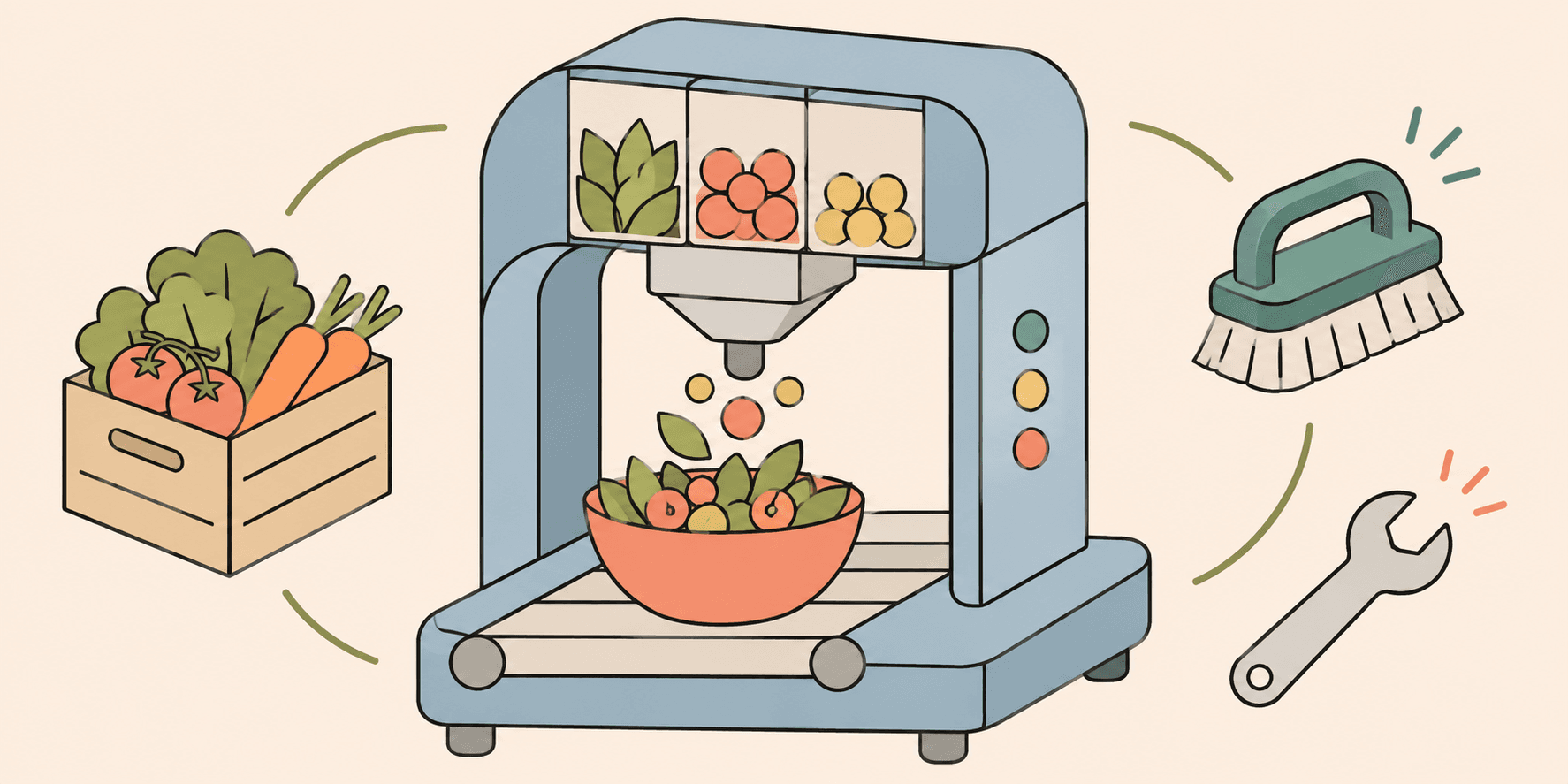
A bowl leaving an automated assembly line depends on work done before it arrived. Ingredients need preparation, while surfaces need cleaning before the next order.
A restaurant can automate one operation while other work moves elsewhere. It may happen before service or under a supplier's contract. A staffing claim needs to include those parts of the operation.
Sweetgreen's Infinite Kitchen gives that assessment a specific system to examine. The question is what the whole restaurant delivers, with the work required to support it included in the cost.
Specify the automated task
Wonder, Infinite Kitchen's current owner, describes the system as food robotics for automated bowl making in its 2026 materials. That task defines which part of restaurant production the system takes over. Other activities need their own operating account. Wonder's description
Preparing ingredients has different requirements from assembling an order. Cleaning follows its own procedure, while delivery occurs after the food is made. Automation in one stage can change workloads in the others.
Changes in sodium depend on recipes. Purchasing choices affect ingredients with preservatives, while measured waste depends on the operating process. Each result needs evidence about those choices.
An assembly machine requires ingredients in a form it can use. The preparation may take place in the restaurant or at another site. Both arrangements require that work before the customer receives a meal.
Moving preparation can be a sensible operating decision. The explanation should state where it went so the labor account covers the complete service.
Date the ownership change
The original gist described Sweetgreen's Spyce sale to Wonder as completed in November 2025. Sweetgreen's later filing records the closing on December 29, 2025. The completion filing
Sweetgreen's February 2026 announcement says it would continue deploying Infinite Kitchen. Its arrangement with Wonder includes supply and service agreements. It also covers licensing. That permits restaurant use after the technology business changed owners. Sweetgreen's explanation
The arrangement separates restaurant operation from parts of the technology supply. Maintenance can depend on another party, as can support or intellectual-property rights. The restaurant needs that service arrangement to keep the equipment usable.
The sale establishes a change in ownership with new commercial relationships. Assessing the equipment's operating result requires evidence from the restaurants using it.
Count work across the shift
A demonstration of assembly leaves out opening work. Replenishment takes place during service, with cleaning required around it. Exceptions need attention too, before closing work finishes the shift. Labor savings need all of those hours in the comparison.
Suppose a hypothetical restaurant reduces lunch-rush assembly work while adding cleaning time. Equipment checks take additional time as well. Total labor depends on the net change, while service quality depends on what staff can do during the time made available.
Labor expense as a share of sales can increase when sales fall, even if hours stay unchanged. Hours per order measures one aspect of the operation; cost per order measures another. Total hours also need a service-quality measure beside them.
Sweetgreen's November 2026 filing attributes a companywide rise in labor expense as a share of revenue partly to lower sales volume. Other factors also contributed. The filing describes the company's result, leaving the specific effect of Infinite Kitchen to a more targeted comparison. The current quarterly filing
I'd compare relevant restaurants over comparable periods before assigning a saving to the machine. The gist's broad labor percentages lacked that comparison, leaving the claimed effect unresolved.
Evaluate the actual cleaning process
Precise dispensing controls one part of assembly. Allergen safety also depends on the ingredients' contact with the equipment, including whether the required cleaning was completed.
FDA research found that allergen removal varied with the food on a surface. Surface material affected the result, as did the wiping or cleaning method. Evaluating a kitchen therefore requires its cleaning procedure, with evidence about how that procedure performs. FDA's allergen-cleaning research
FDA's September 2026 Food Code update covers allergen cross-contact among its topics. It also addresses vending controls. The code is a model for regulatory jurisdictions, each of which determines the requirements applying within its authority. The 2026 update
An automated kitchen needs to specify what is cleaned. Checks need to establish whether the process happened as intended, including handling outside the normal sequence. Omitting an ingredient in software changes the order specification, with contact on the production equipment left to those procedures.
Test a full service period
I'd assess the system during an ordinary shift that includes exceptions. A low ingredient supply tests replenishment. A changed order tests the response procedure, while a component fault tests equipment support. The assessment needs to follow what happens next.
Each situation needs someone responsible for detecting it. That person needs a response they can carry out, with customers informed about the effect on service. Equipment may simplify those tasks. The operating description still needs to name their owners.
Kitchen automation can improve a repeated task when it fits the surrounding restaurant. Count supporting work across the shift before judging the result customers receive. Assembly is one stage in that account.