A compostable cup needs somewhere to go
Compostability depends on specified conditions. A packaging decision also needs an accepting collector with a facility able to process the actual item.
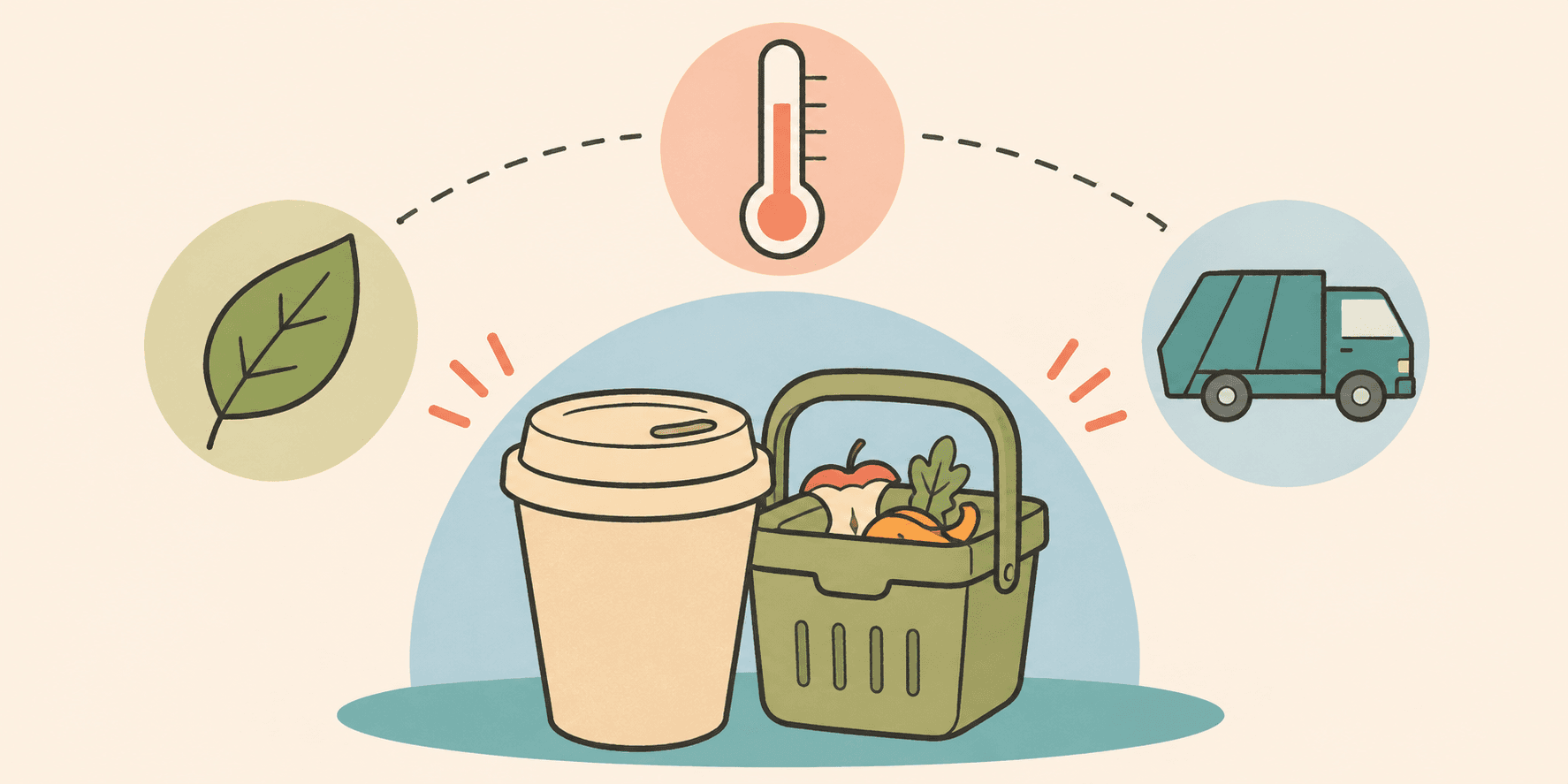
A compostable cup needs a disposal route that reaches the conditions required to process it.
The material label leaves collection to be arranged. A facility must accept the item before it can spend the required time in the intended process.
I'd evaluate a biodegradable product across that complete route. It needs to perform during use, then follow a workable path after disposal. Appearance supplies little evidence about either requirement.
Distinguish origin from disposal conditions
The European Commission separates biological feedstocks from biodegradability. It describes compostability as a specific category with required conditions, supported by collection. A plastic made from biological material still needs evidence about how it breaks down. The Commission's explanation
"Made from plants" describes an input. Assessing its effect after disposal requires a different claim about behavior in a specified environment.
The complete product needs that assessment too. A cup may include a coating with printing on its surface, while the lid may use another material. Instructions need to cover the item the customer will dispose of.
A takeaway cup therefore needs a locally applicable collection instruction. The same packaging can enter different waste systems depending on where it was sold or where the customer finishes the drink.
Put the conditions beside the label
The FTC's Green Guides summary says compostability claims need scientific support. Qualifications are required where home composting or facility access is limited. Its degradability guidance also ties claims to customary disposal conditions. The FTC's guidance
The condition defines part of the promised performance. Leaving it out extends the claim beyond the environment in which the evidence was obtained.
Industrial composting uses specified operating conditions. A backyard heap supplies another environment, while seawater supplies a different one again. A result from one process needs evidence before it can predict behavior in another.
A seller has an incentive to give the reassuring label more attention than its qualification. Disposal instructions need to make the condition readable when the customer chooses the bin.
Date the bag experiment
University of Plymouth researchers reported in 2019 that some biodegradable bag formulations still carried shopping after years in soil or seawater. Results varied by material. The compostable bag also behaved differently between its marine exposure and soil exposure. The researchers' account
The experiment covers those materials under those exposures. Evaluating a current product requires its own result, with the 2019 finding kept at its original date.
The package label left behavior dependent on the disposal environment. A test also needs to say what it measured: disintegration describes one observation, while loss of strength describes another. Complete biological breakdown needs its own assessment.
A newer material therefore needs new evidence. The older experiment identifies questions for that evaluation, especially about the conditions outside the intended process.
Trace the cafe's actual waste route
Consider a hypothetical cafe changing takeaway packaging. Certification can help assess the item, while the operating decision also requires a route for processing it after use.
The collector needs to accept that product. The receiving facility then needs to process it in the specified stream. Customers taking a cup elsewhere may encounter a different collection system, so the cafe also needs instructions that account for that destination.
Sorting errors affect the comparison. A system that depends on every customer recognizing each component leaves part of its performance dependent on customer behavior beyond the material specification.
This purchasing example evaluates one drink served with packaging that performs as required. Its assessment continues into the disposal route. A named cafe would need evidence about its own service to support the same conclusion.
If that route is unavailable, another package may fit the operation better. Reuse could also be examined where the required arrangements exist. The comparison needs to include the work with the resources each option consumes.
Apply the policy to the local operation
The European Commission announced phased application of new EU packaging rules from August 2026. Individual requirements have their own timing, with product category affecting what applies. The policy change also leaves each collection route to be established locally. The August 2026 update
A business needs the requirements for its particular product at its location. Its design claims should match the collection arrangement, with treatment available at the destination.
The cup must first hold the drink safely for the intended use. Its disposal route must then meet the claimed treatment conditions. A comparison needs evidence for each stage of that life.
Compostable packaging can serve a defined waste route where collection reaches an accepting facility. State that route beside the material claim so the customer knows what has to happen after using the cup.