Follow one COCOON request before promising private AI
Telegram has announced COCOON-powered summaries. An application still needs to inspect the complete data path behind its own privacy claim.
COCOON already has a documented application inside Telegram. Telegram's 3 January 2026 update says its AI summaries use open-source models running on the network. That is a concrete change from describing the project only as a forthcoming GPU marketplace.
The more useful question is what confidential inference gives the application. A network can run paid requests while still needing a careful explanation of which data is protected and which parts of the system the client trusts.
Begin with the application using the network
Telegram's AI-summary announcement covers channel posts and Instant View pages. It identifies COCOON as the infrastructure behind the summaries and describes encrypted requests. The announcement establishes a named use case, with no measurement of an individual worker's revenue.
For an application developer, inference means running a model on an input to produce an output. The service's usefulness depends on whether that output meets the application's task. A summary that omits a condition can be wrong even if the request travelled through a protected execution environment.
That gives an evaluation two separate records. One concerns the quality of the result. The other concerns how the input was handled during computation. A privacy claim cannot replace checking whether the summary preserves the meaning of the source.
Confidential execution has a trust boundary
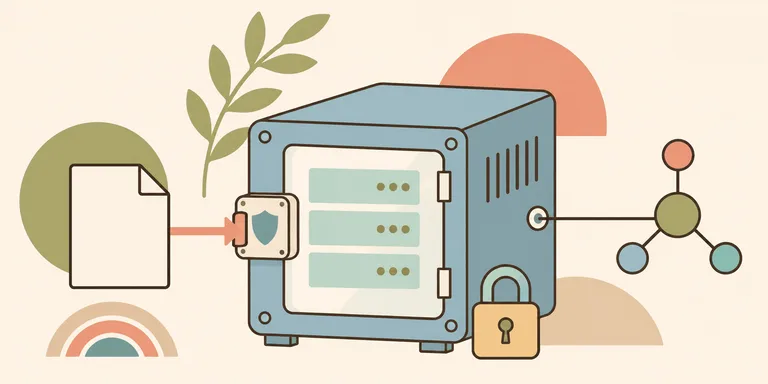
COCOON's architecture description uses workers inside trusted execution environments. A client sends requests through a proxy, which selects a worker. The documentation describes attestation as part of establishing the protected communication path.
Attestation lets a verifier evaluate evidence about the execution environment against expected properties. It needs an acceptance policy: which environment the client will trust and what evidence it will accept. A service name alone says little about that decision.
NVIDIA's confidential-computing overview describes the relationship between platform evidence, launch policy and releasing secrets to an approved environment. That is useful background for understanding why hardware support is only part of the deployment.
For your application, identify where the confidential boundary begins. The input may already have passed through your own backend. If that backend logs the full request, a protected model execution leaves that separate copy in the log. Map the actual data path before deciding what you can promise a user.
Check who controls the accepted environment
The COCOON architecture page says its team currently operates the proxies and manages the root contract. It describes wider proxy participation and decentralised governance as future directions. That distinction belongs in any explanation of how the network operates today.
The root registry contains information used to identify allowed execution images and models. A client that accepts changes to that registry is relying on the process that controls those changes. The relevant question is who can alter the accepted configuration and how the application learns about the change.
This does not make a distributed worker network unusable. It specifies a dependency that a developer can evaluate. Record the accepted configuration with the deployed client so an operational review has something more precise than a broad decentralisation claim.
Performance has another boundary. The architecture documentation explicitly separates confidential execution from a guarantee of performance. A correctly identified worker can still be too slow for the application's response-time requirement. Measure that requirement through actual requests.
Integration promises need a working client path
The COCOON developer page describes backend integration and identifies a separate lightweight client library as work in progress. The documentation checked on 14 November 2026 therefore needs to be read at the level of the particular integration route you plan to use.
A backend proof of concept should exercise the complete request your product needs. Supply a representative input, inspect the returned result and retain the processing record. Then test the behaviour when the request cannot complete within the product's allowed time.
Keep credentials outside user-visible responses. Decide what request data is necessary for diagnosis. A useful operational log can often identify an execution without copying all of its content. The exact logging policy should follow the product's data requirements.
The user-facing explanation should cover the whole path under your control. If the model request is protected but your application retains the original document, describe that retention directly. Calling the entire product private without specifying its storage would leave the user unable to judge the claim.
Product use and worker income need separate evidence
A named Telegram feature gives the network an identifiable use case. A host deciding whether to provide capacity still needs its own record of eligible work and received payments. One application's adoption does not specify how much work the network will assign to a particular machine.
For an application developer, the decision is different. Test whether the confidential-execution route meets the product's data-handling requirements at an acceptable response time. Check the model's result against the original task before extending the integration to more users.
COCOON's current documentation makes that evaluation possible at a more concrete level than a general GPU-sharing pitch. Follow one request across its actual boundaries, then write the privacy claim your application can support.