Autonomous ships need a precise job description
An autonomous vessel can use different control modes during one journey. Evaluate the service by specifying each function with its operator and operating limits.
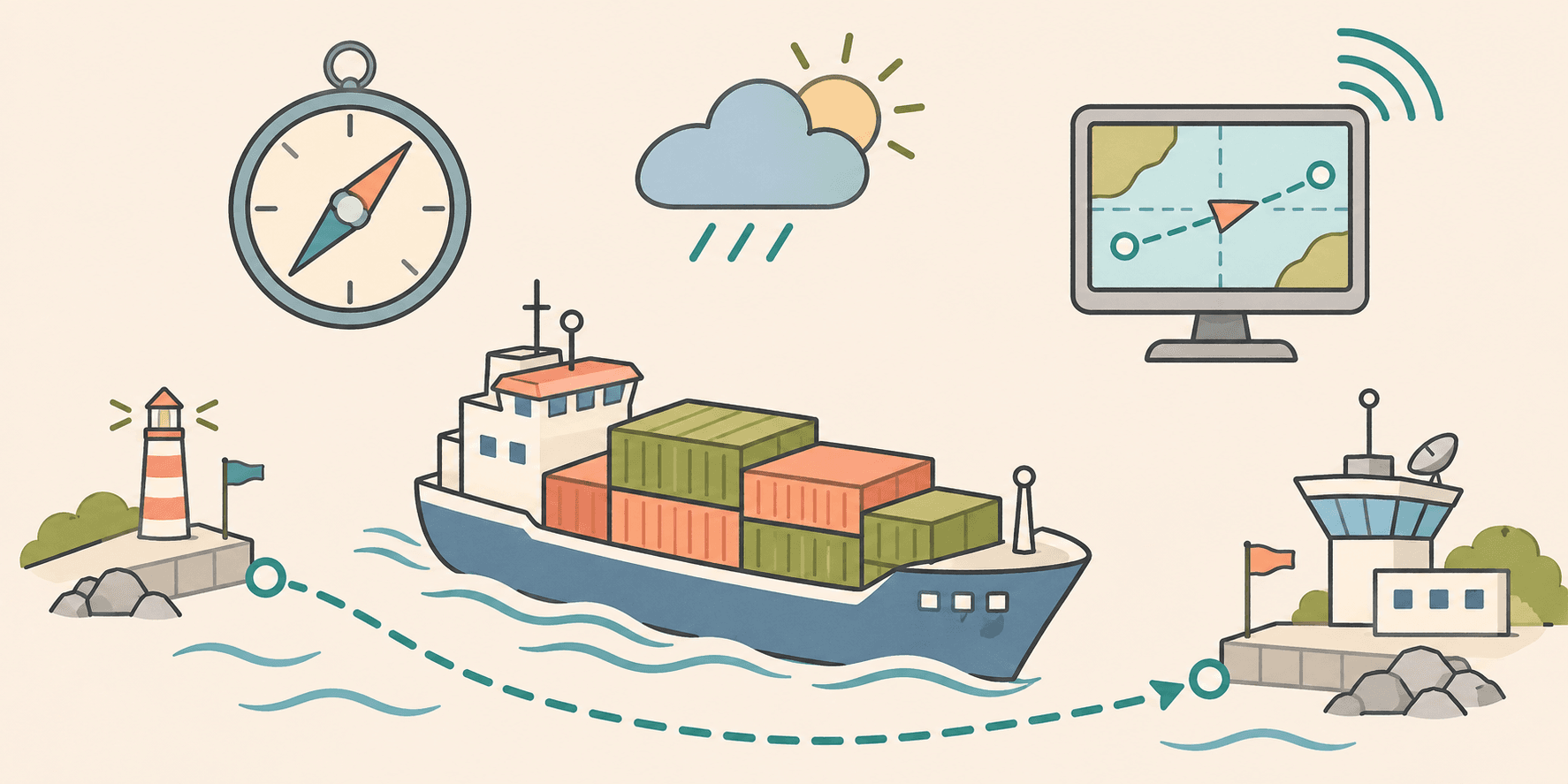
An autonomous-ship description needs to name the functions the vessel performs. It also needs operating conditions, with responsibility assigned when those conditions change.
A vessel can navigate automatically while people handle other work. A shore operator can control a function remotely. Modes can change during the same journey, so the label alone leaves much of the operation unspecified.
Progress can be examined through a defined service with a repeatable procedure. A specified route gives reviewers a setting in which to assess the handover between control modes.
The MASS Code took effect in July 2026
My original note described the international code as an expected 2026 milestone. IMO has since adopted it.
The International Maritime Organization adopted the non-mandatory MASS Code in May 2026, with effect from July 1. It supplies a goal-based framework for remote-controlled or autonomous ships. Applicable mandatory instruments still apply, including SOLAS. Each proposed operation remains subject to the approvals it needs. IMO's adoption announcement
IMO's explanation calls for descriptions of the modes a vessel is designed to use. The main scope covers cargo ships under SOLAS Chapter I. Governments are encouraged to apply the code more widely where practicable. IMO's autonomous-shipping FAQ
Specifying the operating modes gives a reviewer behavior to inspect. The claim can then be assessed against the conditions in which each mode is intended to work.
Assign modes to individual functions
DNV's AROS framework separates navigation from engineering functions. It also accounts for operational functions with safety functions. Its modes distinguish decision support from remote control, then supervised autonomy from full autonomy. Control location is specified separately, allowing different modes for different functions. DNV's framework
An automated-navigation demonstration covers part of a voyage. Propulsion still needs management, especially during an abnormal machinery condition. Port coordination has its own responsibilities, as does responding to a safety event.
In a hypothetical service, a ship could follow its route automatically while a shore operator manages an equipment fault. The operating description needs to show both contributions so a reviewer can assess the complete service.
I'd map each function to its owner. The map should show which decisions happen onboard, then which depend on a shore connection. Tasks requiring someone physically present need an explicit place in the operation too.
Include the terminal in the route
Massterly describes Yara Birkeland carrying fertilizer between Yara's Porsgrunn production site and the export port at Brevik in Norway. Its project account covers testing with the shore infrastructure. That includes mooring with charging arrangements, plus loading and unloading. Massterly's project description
The page also describes planned uncrewed operation. Establishing that the transition has been completed would require a current operational result. The forward-looking statements describe the intended development.
Repeating a constrained route lets the vessel's procedures be developed with the terminals it serves. Extending a result to another port requires examining that port's conditions. A different sea area would need its own evidence too.
Charging affects the vessel's turnaround, as does cargo handling. A successful navigation system still depends on those stationary parts of the journey before it can deliver a repeatable transport service.
Design the transition out of normal operation
I want an operating concept to explain what happens when the ordinary journey can no longer continue as planned.
Consider hypothetical poor visibility or an unreliable connection. A harbor could also become unavailable. Each case needs a detection method, followed by an available response. If control must transfer, the procedure needs to specify who receives it.
A remote operator needs information sufficient to understand the condition. Their authority must cover the response, with time available to act. The onboard system also needs a defined behavior when human assistance is unavailable.
A safe response at sea depends on the vessel's surroundings with its capabilities. Even stopping needs that context. A statement about human oversight becomes assessable when it explains the response to a specific abnormal condition.
Measure the service delivered
Voyage counts describe operational experience. Assessing safety requires outcome evidence with a relevant comparison. Economic advantage needs a cost account, while independence from human labor requires measuring work across the full service.
Moving people ashore can leave substantial shore-side work. A late delivery needs its cause investigated even when navigation was automated. Electric propulsion also has its own performance questions, separate from the control system used on the same vessel.
I'd judge a deployment by its description of the actual service. Its limits should be stated beside operational evidence, so another person can see which conditions the result covers.
The job description needs to extend across the transport operation. Assigning each responsibility makes it possible to evaluate what the autonomous functions contribute.